Showing posts with label Gamers' Frontier. Show all posts

Sunday, July 19, 2015

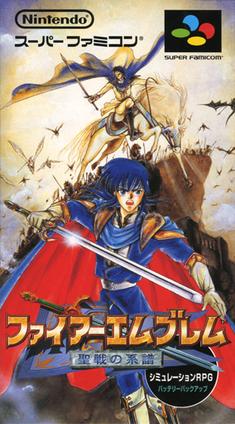
Gamer’s Frontier: Fire Emblem- Genealogy of the Holy War

Don't have a horse? Then your pretty much screwed.
Console: Super Famicom/Super NES
Genre: Turn based strategy
Year Released: 1996
Developer: Intelligent Systems
Publisher: Nintendo
Overlooked or Rare: Overlooked


Fire Emblem is one of my favorite franchises. It’s a strategy series with simple mechanics, but with enough depth and challenge to keep the player engaged. The series is home to 13 (soon to be 14) games, but what’s interesting is that the first six games, as well as the twelfth, never saw a release outside of Japan. Even though half the series is stuck in Japan, it’s still possible to play them thanks to emulators and fan translations. Today’s post is about Genealogy of the Holy War, the fourth game in the series.


Story and Concept
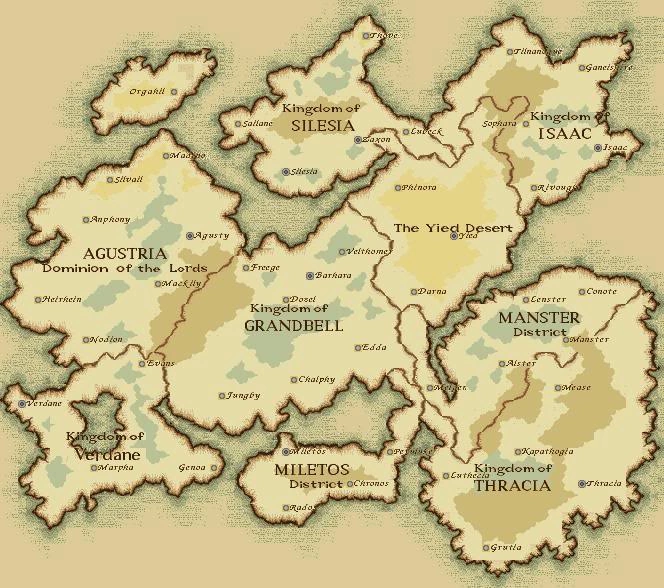
The continent of Jugdral, a land influenced by Norse Mythology.
Genealogy of the Holy War takes place on the continent of Jugdral. More than a hundred years ago, the evil Lopto Empire was overthrown by the Twelve Crusaders. The Crusaders founded kingdoms across the continent, while the remnants of the Empire sought refuge in the Yield Desert, hoping one day to resurrect the dark god Loptyr and restore their reign. In the year 757, the kingdom of Grannvale launches a military expedition to the nation of Isaach to punish them for their actions in the Desert. Little do the people of Jugdral know that this will lead to the start of a new Holy War…
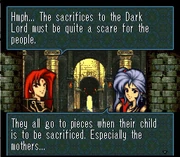


The fan patch offers a decent translation, but it's pretty basic.
Genealogy of the Holy War has the best story out of any Fire Emblem game. It has some great world building and backstory, and is filled with political intrigue, betrayal, and incest (yes, you read that right). For a Fire Emblem game with support conversations, it handles its characters quite well, even with so little screentime for many of its characters. My one complaint is that it’s way too black and white; the good guys are saints (sometimes literally) and the bad guys are demonic jerks (sometimes literally). Still, it’s Fire Emblem’s best story and, as far as I know, the darkest the games have ever gotten.


Graphics and Design
A sample battle animation.
I can’t really complain about the SNES’s graphics, since I’m too young to truly appreciate the era. However, I have grown fond of the simplicity of Genealogy's graphical design. The character design is simple but effective, which is par for the course for Fire Emblem. Same goes for the battle animations, especially when you change them to map only. Really, I can’t say much bad about Genealogy graphically; simple, yes, but more than adequate.


Sound and Music

Fire Emblem games almost always have great soundtracks, and Genealogy is no exception. It’s music fits each and every situation perfectly. Each piece of music sounds very medieval in instrumentation, and I haven’t found a track I didn’t enjoy listening to. The sound effects in this game are also quite good, giving me a really nostalgic feeling. I really like this game’s sound design, even if the boss music is comparatively unimpressive.


Gameplay
You control an army of blue guys and wipe out the red guys. Pretty simple.
Genealogy is much like past Fire Emblem games in terms of its core gameplay. You control an army of units, each with their own class and stats, and you engage in turn based strategy with the enemy. It includes FE’s iconic weapon triangle (swords have an advantage over axes, axes have advantage over lances, and lances have advantage over swords), as well as the ability to promote units when they’ve reached a certain level. However, there are many things that make Genealogy unique from other games in the series.
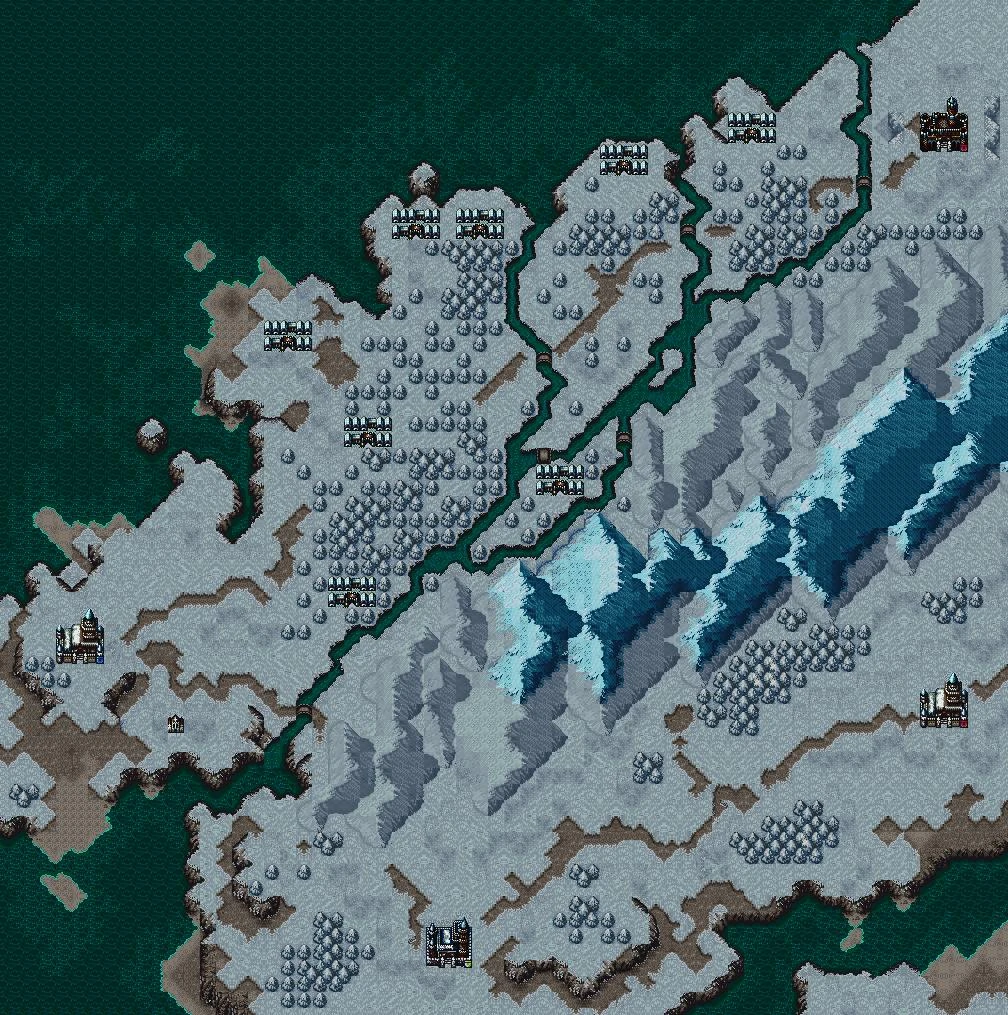


The map of Chapter 4. Note the multiple castles to seize.
The first major difference is Genealogy’s map design. The game features maps much larger than the Fire Emblem norm, and rather than have a single objective, each map has multiple. This makes the maps in Genealogy feel more like full campaigns and not just battles. I appreciate the idea, but there are some downsides to this aspect of the game. For one, the sheer size of the map means that low movement units have difficulty keeping up with any mounted unit, which is a serious problem in a game that puts so much emphasis on speedy advances. Another is that the maps themselves lack variety in the landscape, and are often too open. The map design is not Awakening-level barren, but I still feel it could have been much better.


How you pair up the first generation of units is crucial for the second half of the game.
Another major part of the game is the marriage mechanic. If two units of the opposite sex spend enough time next to each other, they will eventually fall in love. Starting in Chapter 6, the pairings you made with the first set of units will determine the abilities and stats of the children characters. I actually really like the children system, as it rewards intelligent players for making wise pairings with powerful children units. It also encourages experimentation to see which pairings work and which don’t. It does bring up a huge problem with the game, but we’ll get to that later.
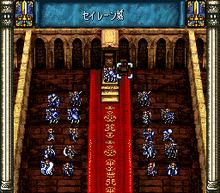


A shot of the Home Castle.
There are other elements in Genealogy worth noting. One is the home castle, from which you can deploy units, promote units, buy items, and fight in the arena for experience and gold. Each unit has their own supply of gold, which they increase by winning arena battles and visiting villages. Each unit has access to abilities that aid them in battle. For example, the Critical skill can unleash a strike with double damage depending on the unit’s skill stat. All these add layers of strategy to the game, and I like each one of them.
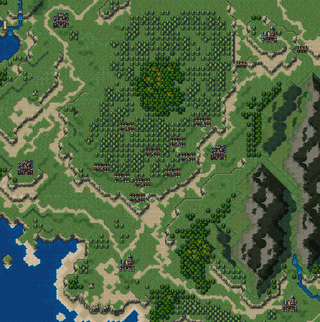


That little peninsula in the southwest corner gives the player one of the best items in the game, but only if a certain unit stands on it.
However, the game is not without its faults. The biggest would be the beginner unfriendly this game is. Without consulting a guide, this game can be incredibly difficult, if not nearly impossible. For instance, there are several hidden conversations and events that can only be triggered in certain circumstances. These usually net the player stat boosts or powerful items, but without a guide, new players can easily miss out on these items. Heck, some items are only obtainable by having a specific unit standing in a specific tile. And don’t even get me started with the amount of research needed to find decent pairing. Out of all the Fire Emblem games I’ve played, this is the only one where a guide is practically needed.


That being said, the game does offer a fair challenge if you know what you’re doing. The RNG, while more brutal than more modern Fire Emblem titles, is still fair. The game does a great job of reward smart moves and punishes any player that leaves an opening. I especially appreciate how the enemy AI gradually gets more brutal and cunning as the game progresses, instead of having brain dead enemy units that rush into your sword at all times. Even with the high barrier of entry, Genealogy is a fair challenge for any strategy enthusiast.


I have a few nitpicks, like the lack of a trade mechanic, or the near uselessness of several characters in a game where every unit counts, but those aren’t big enough hindrances to prevent an enjoyable experience.


Final Words
Genealogy is a hard game, make no mistake, but it’s also a great experience. It presents a fair challenge, an intriguing story, and great music. For any dedicated Fire Emblem fan or strategy enthusiast, this is definitely worth a download. Just be warned: going in blind is not recommended.

Thursday, March 5, 2015

Gamer's Frontier: No More Heroes 2

In it to win it, baby!
Console: Wii
Genre: Hack and Slash
Year Released: 2010
Developer: Grasshopper Manufacturing
Publishers: Ubisoft (North America and Australia), Rising Star Games (Europe), Marvelous Entertainment (Japan)
Overlooked or Rare: Overlooked

The traditional assassin relies on stealth and quickness to eliminate their targets. You wouldn’t expect one to run into a fight and use flashy attacks to do their jobs. No More Heroes is a game series that depicts assassin and otaku Travis Touchdown on his quest to become the best assassin in the business. And how? By running into fights and using flashy attacks to do his job and literally eliminate the competition. And the games themselves are absolutely fantastic. Today, I’ll be talking about the second game, Desperate Struggle.

Story and Concept
A example of what you have to fight in the game. Don't ask me how he got to be one of the country's best assassins.

No More Heroes kicks off when Travis Touchdown blew his entire income on getting a beam katana (basically a lightsaber). To make some much needed cash (and to get laid), he entered the assassination business, and started jobs to eliminate other assassins to become the number one assassin in America by default. The games ends with Travis climbing to the top and getting into a beam katana fight with his half brother...in a freezeframe. Yeah.

No More Heroes 2 takes place three years after the events of the first game, with Travis returning to his hometown of Santa Destroy to find that death matches between assassins have become a televised sport. After he learns that his best (and only) friend has been killed by the henchmen of the new number one assassin in America, he sets off on a similar quest, but this time out of vengeance.

Fighting a quarterback that can merge with his fans to form a mech is perhaps the best concept for a boss fight ever.

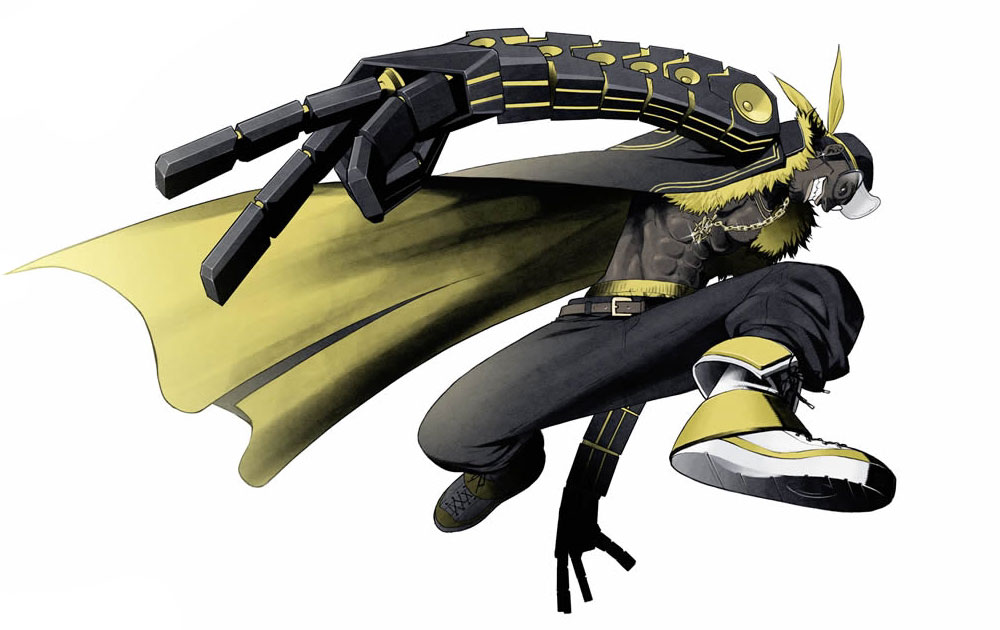
Probably the biggest plus about No More Heroes is how it runs with its ridiculous premise. Assassins in this game include an overzealous hip hop artist with a morphing boombox and the spirit of a lost cosmonaut. Travis regularly uses wrestling moves to finish mooks. Heck, one assassination death match against a mech made out of a quarterback and his groupies. And Travis counters with mech of his own! No More Heroes knows how silly it is, and it tries as hard as it can to make it sillier. This game is weird, but in the most awesome way. The story may not be the strongest, but the concept is amazing.

Graphics and Design
Travis's room pretty much encapsulates every thing I love about this game's graphic.

No More Heroes uses cel-shaded graphics, which really complements the over-the-topness and downright violent nature of the game. Visuals look like they’ve been lifted straight out of a graphic novel (or a manga, more likely). It also helps that the graphics is practically drowning in blood. Defeated enemies produce entire geysers of blood, which is actually more ridiculous than gory. I do wish it was a bit more colorful, but its a cool style nonetheless.

Sound and Music

Fun fact: the franchise is named after an album by The Stranglers. Another fun fact: this game’s soundtrack is amazing. Its very diverse, with rock, electronic pop, jazz, and even hip hop song sung in Japanese. The music always fits the mood, is very memorable, and its catchy as all hell. There isn’t a single track I actually dislike, which is a huge accomplishment. Add that to some very solid voice acting, and you have a great sounding game.

Gameplay
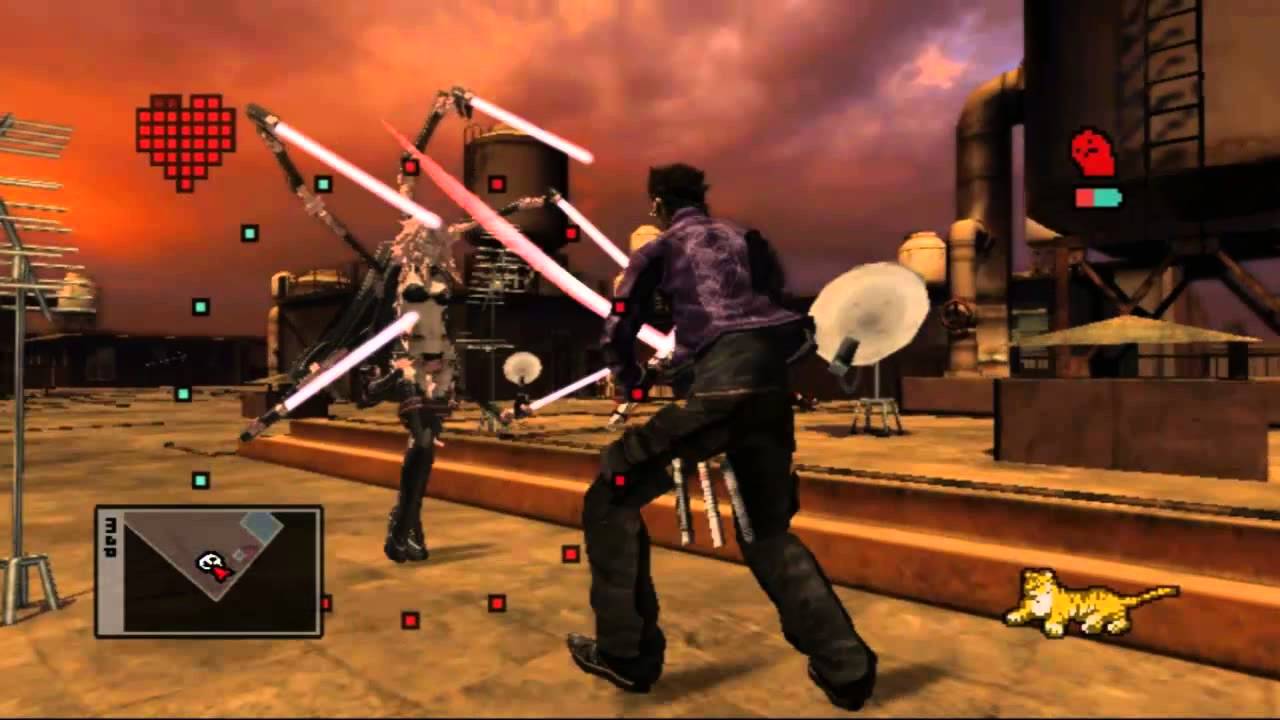
A shot of the action.
No More Heroes features a simple combat system that relies on how you tilt your Wiimote. Tilting the Wiimote upwards will give your slashes more speed, while tilting it downwards will give your slashes more power. You also have access to four different beam katanas in the game, each with their own strengths and weaknesses. While combo potential in this game isn’t as high in other hack and slash games, it is a very satisfying system, and its easy enough to learn for even casual fans of the genre. Its one of the few Wii games that gets motion controls right, which is a huge accomplishment.

Alice is one of the best boss fights I've ever fought, period.

A big part of the game is the fights with the other assassins, and they’re a mixed bag. You have brilliant fights like the one with Alice Twilight and her walker machine, Margaret Moonlight and her scythe-sniper rifle combo, and Ryuji with his beam naginata. These fights are challenging but balanced, and always fun. On the other hand, you have fights with New Destroyman and Million Gunman, which are ruined by poorly executed gimmicks. The better fights of this game are fantastic, but the lower end can be infuriating.

I wish I could earn money by playing NES games...

It should be worth mentioning that you get money in this game through side jobs. Each job is a 8-bit style minigame in which you can arrange pipes, exterminate vermin, and even cook steaks. The minigames are surprisingly well executed, and are really fun. I actually didn’t mind taking a break from the main game to play them. The money you earn can go towards stat boosts and expanding Travis’s wardrobe, and its amusing to dress him up in themed outfits before each boss fight.

Final Words
No More Heroes 2 is a fantastic hack and slash with a ton of personality. Its graphic and crude, sure, but its also extremely satisfying and not afraid to escalate its silliness. If you have a Wii or Wii U and an itch for a great hack and slash, I couldn’t recommend this enough. It should be fairly cheap now.

Friday, January 16, 2015

Gamer's Frontier: Arc Rise Fantasia

Good RPGs on the Wii are a rarity. Quite literally.
Console: Wii
Genre: JRPG
Year Released: 2009 (Japan), 2010 (North America)
Developers: Imageepoch, Marvelous Entertainment
Publishers: Marvelous Entertainment (Japan), Ignition Entertainment (North America)
Overlooked or Rare?: Both

Welcome to the very first Gamers' Frontier! Here I cover games that are rare, that I think don’t get enough attention, or both.

Now usually with Wii games, you have to dig through mountains of shovelware to find anything of worth. Sure, you have famous titles like Super Mario Galaxy and Legend of Zelda: Skyward sword, but if you want the lesser known gems, you have to be willing to go on a hunt. Titles like Punch Out and Fire Emblem: Radiant Dawn are harder to find, and some titles are near impossible to even locate. I found Arc Rise Fantasia, one of the rarest Wii titles, in a nearby Half Priced Books. And honestly, I’m quite glad I finally found it.

Story and Concept
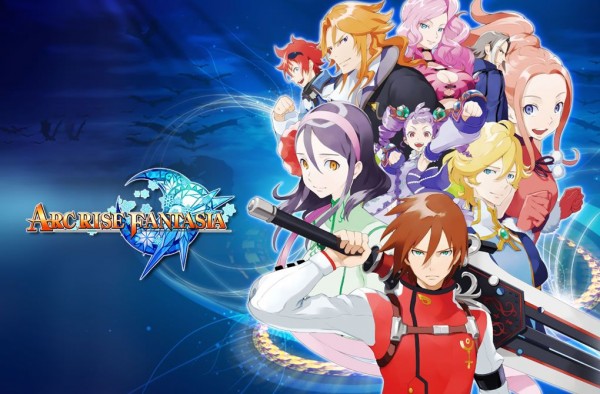
The playable cast of Arc Rise Fantasia. Note the lone adult tucked away in the back, next to the giant pair of breasts.
Arc Rise Fantasia is a Japanese role playing game (or “JRPG”) developed by Marvelous Entertainment. It takes place in the fantasy world of Fulheim, which faces threats from both the destructive Feldragons and the crystallization of their home. The story focuses on L’Arc, a young mercenary under the employment of the Meridian Empire, one of Fulheim’s three major powers. He meets a mysterious girl named Ryfia, and things start to unfold from a simple struggle against the Feldragons to a conflict that will decide the fate of all of Fulheim.

Yeah, the story is a bit generic at first, but as you progress, it actually becomes pretty interesting. The characters are the same: at first they aren’t much more than stock anime characters, but eventually they reveal themselves to be a bit more complex. Really, you have to be patient with this game; if you can stomach the first few hours, you’ll find a pretty engrossing fantasy world with a decent story.

Graphics and Design
A shot from the overworld map. Wait, JRPGs still have those?
The Wii may not have the best hardware, but that doesn't mean it can’t pump out some great-looking games. And for a Wii game, Arc Rise Fantasia looks pretty damn good. Sure, it doesn't look as impressive or complex as modern JRPGs, but it's still very colorful and easy to look at. The character models fall into the same boat: simple design, but still quite good. The character design is simple but effective, and same goes for the monster design, though both could have been a bit more creative.

Sound and Music
A taste of the voice acting.

The lowest low of Arc Rise Fantasia is the voice acting. This game has some of the worst voice acting I’ve heard in a video game. Its practically emotionless; nearly every line lead is flat and doesn’t fit the situation at all. It also doesn’t help that there are ton of unnecessary pauses. I’ve listened to fandubs better than what Ignition is trying to pass of as a dub.

The boss theme.

Fortunately, the music of the game is tremendous. Composed by the legendary Yasunori Mitsuda (the man who composed most of Chrono Trigger’s soundtrack), this game features an all-around excellent soundtrack that adds a layer of atmosphere to every scene. From the field theme to the battle music, there isn’t a track I can say a poor thing about.

Gameplay
A sample battle scene.
Arc Rise Fantasia follows in the footsteps of many of its JRPG brothers. You travel the world, fighting monsters, leveling up, buying new equipment, and all that good stuff. However, it adds a few of its own elements to avoid being just another generic JRPG. Take the weapons, for example. The weapons don’t modify your character’s strength, but instead come with abilities. Some are fixed to the weapon, while others can be relocated once the weapon has been modified. You can stack different abilities onto weapons to optimize your party members and even unlock hidden upgrades.

A sample boss fight. Is that a Malboro?
The magic system is similar. Your party members can’t learn magic, but they can equip special gems that allows them to cast spells. You can either stack gems of the same element on top of each other to learn more powerful spells, or you can equip gems of different elements to gain access to new elements. With both weapon and magic customization for each party member, you can optimize your party as you see fit in a surprisingly deep system.

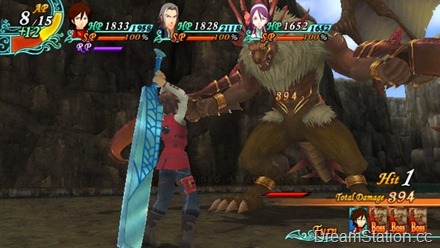
He's fighting a bat-bear-lion-monster thing with a sword as big as he is. Yep, this is a JRPG.
Of course, any RPG wouldn’t be complete without a fully-realized battle system, and Arc Rise Fantasia has great one. Battles take place on a 3D field, and party members can relocate to a different part of the field if needed. The party shares a pool of Action Points, or AP. Every action, from attacking to casting a spell to performing a special attack, consumes AP. Your actions are limited to how much AP you can use a turn. In addition, you can chain individual actions, like two fire spells for example, for a new and often more powerful action. All this adds up to a deceptively deep system that allows for a lot of strategy. The battle system is easily the game’s strongest point, and is the only one of its kind as far as I can tell.

Final Words
Arc Rise Fantasia is a great JRPG, despite its faults. A bit generic, yes, but if you can stomach the first 3 hours or so, you’ll find a game with a surprising amount of depth. I would recommend this game to any JRPG enthusiast, just as long as they’re willing to pay at least $30.