Hello! My name is Christian Buffum-Robbins and this is my blog. I'll be doing game reviews, mecha anime reviews, and spewing liberal agenda. Hope you enjoy yourselves!
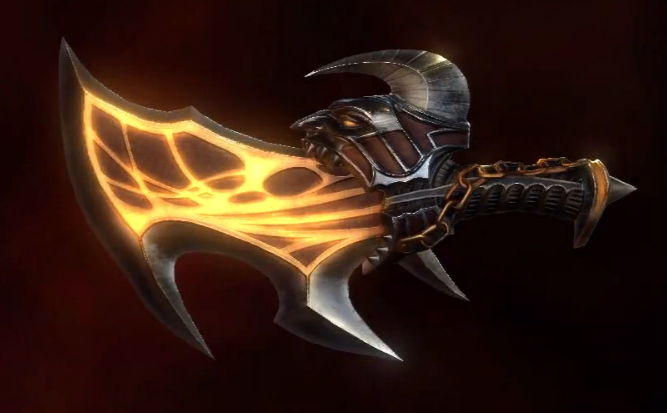
Is this not one of the greatest sword designs of all time? For heck's sake, the blade is coming out of a monster's mouth!
Franchise: God of War
Appearance: God of War III
Type: Swords
The sword is a simple weapon. With its effective and basic design, its easy to pick up and use. Its probably the most effective of all melee weapons. Of course, a regular old sword is boring, and you aren’t going to impress a lot of people with it unless, a) you can do some crazy awesome stuff with it, or b) have a crazy awesome sword. Often times, characters have a sword that combines both. God of War’s anti-hero, Kratos, has two such swords.
The God of War franchise tells the tale of Kratos, a former Spartan general who became a servant of Ares. Throughout the series, Kratos’s hatred for the Olympian Gods (and his general unlikability) grows until Zeus kills him out of fear that he will destroy Olympus, and by extension, the world. Spoilers: Kratos manages to kill most of the Olympians in a quest for vengeance and wipes out all life on Earth in the process. Yeah, Kratos is a bit of a jerk, but his tools of destruction are really cool, especially his Blades of Exile.
Really, I could have chosen any of Kratos’s chained blades, since they’re all basically the same. But in the end I chose the Blades of Exile because not only do they look badass, but also because I’m most familiar with God of War III. The Blades of Exile work much like Kratos’s other chained blades. In action, the blades can extend like chains, greatly extending their range and effectiveness. The blades themselves can also act like chains, meaning you can pull off some awesome platforming and killer moves. The Blades also give Kratos the ability to summon a phantom army of Spartan hoplites, which is exactly as awesome as it sounds.
Its a shame the Blades are owned by one of the least likable characters in fiction, but that doesn’t mean they aren’t awesome in their own right. Next time, we have a mech to talk about. Until then, see you next time.
Good RPGs on the Wii are a rarity. Quite literally.
Console: Wii
Genre: JRPG
Year Released: 2009 (Japan), 2010 (North America)
Developers: Imageepoch, Marvelous Entertainment
Publishers: Marvelous Entertainment (Japan), Ignition Entertainment (North America)
Overlooked or Rare?: Both
Welcome to the very first Gamers' Frontier! Here I cover games that are rare, that I think don’t get enough attention, or both.
Now usually with Wii games, you have to dig through mountains of shovelware to find anything of worth. Sure, you have famous titles like Super Mario Galaxy and Legend of Zelda: Skyward sword, but if you want the lesser known gems, you have to be willing to go on a hunt. Titles like Punch Out and Fire Emblem: Radiant Dawn are harder to find, and some titles are near impossible to even locate. I found Arc Rise Fantasia, one of the rarest Wii titles, in a nearby Half Priced Books. And honestly, I’m quite glad I finally found it.
Story and Concept
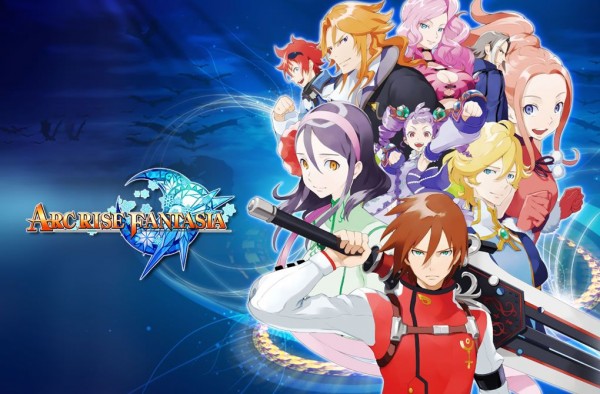
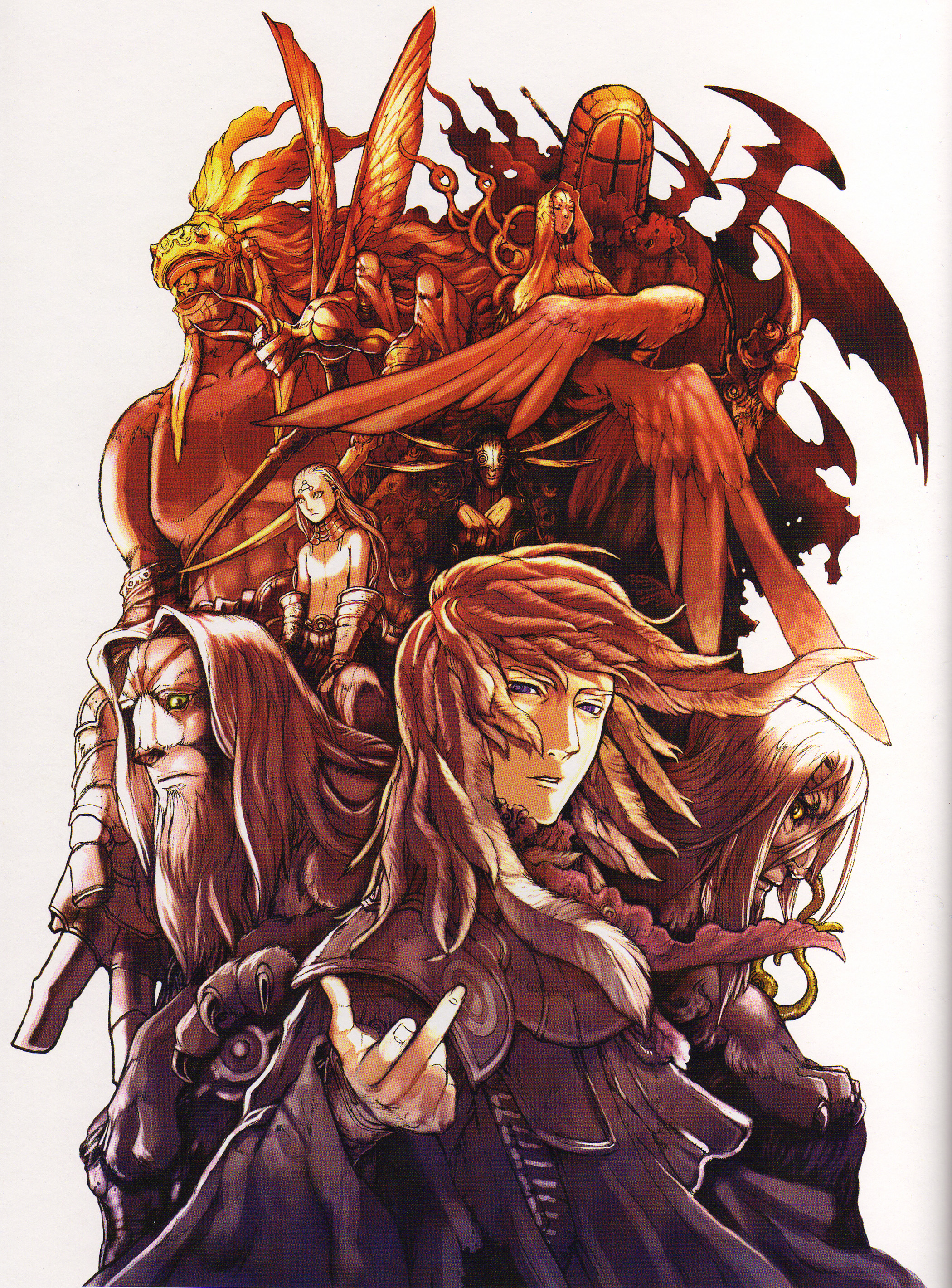
The playable cast of Arc Rise Fantasia. Note the lone adult tucked away in the back, next to the giant pair of breasts.
Arc Rise Fantasia is a Japanese role playing game (or “JRPG”) developed by Marvelous Entertainment. It takes place in the fantasy world of Fulheim, which faces threats from both the destructive Feldragons and the crystallization of their home. The story focuses on L’Arc, a young mercenary under the employment of the Meridian Empire, one of Fulheim’s three major powers. He meets a mysterious girl named Ryfia, and things start to unfold from a simple struggle against the Feldragons to a conflict that will decide the fate of all of Fulheim.
Yeah, the story is a bit generic at first, but as you progress, it actually becomes pretty interesting. The characters are the same: at first they aren’t much more than stock anime characters, but eventually they reveal themselves to be a bit more complex. Really, you have to be patient with this game; if you can stomach the first few hours, you’ll find a pretty engrossing fantasy world with a decent story.
Graphics and Design
A shot from the overworld map. Wait, JRPGs still have those?
The Wii may not have the best hardware, but that doesn't mean it can’t pump out some great-looking games. And for a Wii game, Arc Rise Fantasia looks pretty damn good. Sure, it doesn't look as impressive or complex as modern JRPGs, but it's still very colorful and easy to look at. The character models fall into the same boat: simple design, but still quite good. The character design is simple but effective, and same goes for the monster design, though both could have been a bit more creative.
Sound and Music
A taste of the voice acting.
The lowest low of Arc Rise Fantasia is the voice acting. This game has some of the worst voice acting I’ve heard in a video game. Its practically emotionless; nearly every line lead is flat and doesn’t fit the situation at all. It also doesn’t help that there are ton of unnecessary pauses. I’ve listened to fandubs better than what Ignition is trying to pass of as a dub.
The boss theme.
Fortunately, the music of the game is tremendous. Composed by the legendary Yasunori Mitsuda (the man who composed most of Chrono Trigger’s soundtrack), this game features an all-around excellent soundtrack that adds a layer of atmosphere to every scene. From the field theme to the battle music, there isn’t a track I can say a poor thing about.
Gameplay
A sample battle scene.
Arc Rise Fantasia follows in the footsteps of many of its JRPG brothers. You travel the world, fighting monsters, leveling up, buying new equipment, and all that good stuff. However, it adds a few of its own elements to avoid being just another generic JRPG. Take the weapons, for example. The weapons don’t modify your character’s strength, but instead come with abilities. Some are fixed to the weapon, while others can be relocated once the weapon has been modified. You can stack different abilities onto weapons to optimize your party members and even unlock hidden upgrades.
A sample boss fight. Is that a Malboro?
The magic system is similar. Your party members can’t learn magic, but they can equip special gems that allows them to cast spells. You can either stack gems of the same element on top of each other to learn more powerful spells, or you can equip gems of different elements to gain access to new elements. With both weapon and magic customization for each party member, you can optimize your party as you see fit in a surprisingly deep system.
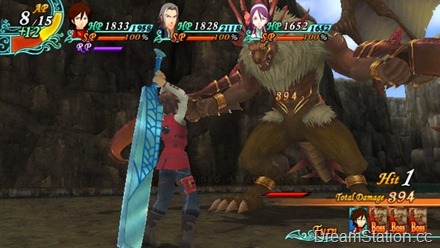
He's fighting a bat-bear-lion-monster thing with a sword as big as he is. Yep, this is a JRPG.
Of course, any RPG wouldn’t be complete without a fully-realized battle system, and Arc Rise Fantasia has great one. Battles take place on a 3D field, and party members can relocate to a different part of the field if needed. The party shares a pool of Action Points, or AP. Every action, from attacking to casting a spell to performing a special attack, consumes AP. Your actions are limited to how much AP you can use a turn. In addition, you can chain individual actions, like two fire spells for example, for a new and often more powerful action. All this adds up to a deceptively deep system that allows for a lot of strategy. The battle system is easily the game’s strongest point, and is the only one of its kind as far as I can tell.
Final Words
Arc Rise Fantasia is a great JRPG, despite its faults. A bit generic, yes, but if you can stomach the first 3 hours or so, you’ll find a game with a surprising amount of depth. I would recommend this game to any JRPG enthusiast, just as long as they’re willing to pay at least $30.
Welcome back to Mechanime! This time I’ll be reviewing Nobunaga the Fool, a very recent anime that only ended recently. Just like last time, this is not a review of the whole show but instead the first few episodes.
Opening
Nobunaga the Fool’s opening, appropriately titled “Fool the World”, is a song that gets the job done. Its a catchy song that builds up to a great and rather energetic chorus. While it is a fun song to listen to, it doesn’t really stand out from all the robot openings out there. Despite being a bit generic, “Fool the World” is a fine opening.
Story
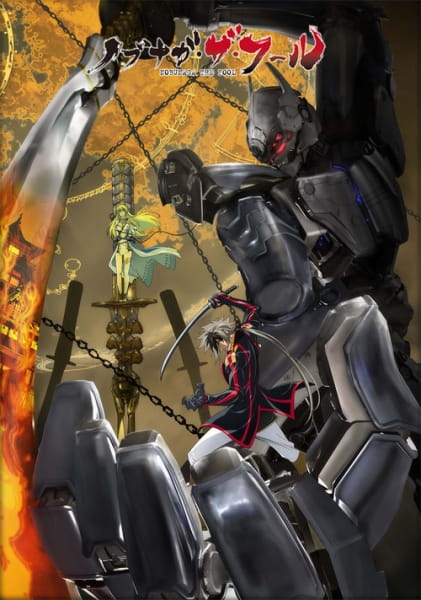
Wielding a sword, in the hand of your menacing mech, which has its own giant sword. Redundant? Of course. Awesome? Oh yeah!
On an alternate plane of being, there exist two planets: the Star of the West (which resembles Europe), and the Star of the East (which resembles Sengoku era Japan). Both stars are embroiled in constant warfare, and it is foreseen by Jeanne Kaguya d’Arc, a young girl of the Western planet, that the planets will be destroyed unless they are united by a Savior King. She and the legendary inventor Leonardo da Vinci travel to the Eastern planet with a special Giant War Armor in order to find the Savior King. The Giant War Armor is activated by Oda Nobunaga, the ostracized heir to the Owari clan. He dubs the machine “The Fool”, and he and his allies soon get dragged into a conflict that will decide the fate of both worlds.
The concept and story of Nobunaga the Fool is pretty out there but is nevertheless effective thanks to great characters and competent writing. It creates an interesting universe that is not only creative but also engrossing. The narrative is easy to follow and is filled with endearing characters, so its easy to get invested in the series. The plot also has an interesting style, blending a traditional adventure narrative with war drama feel. It also features actual consequences for actions taken by the characters, which is honestly quite refreshing.
Characters
From left to right: Himiko, Jeanne, Nobunaga, Mitsuhide, and Hideyoshi
Every character in this anime is based off of a historical figure. You have Nobunaga Oda, the brash and impulsive heir to the Owari clan, his retainers Mitsuhide Akechi and Hideyoshi Toyotomi, the gentle and prophetic Jeanne d’Arc, and the eccentric inventor Leonardo da Vinci. Also among the cast is Julius Caesar, Hannibal Barca, Brutus, Shingen Takeda, and even King Arthur.
To say that Nobunaga the Fool takes creative liberties with its characters is a severe understatement. Each resembles the historic figure he or she is based on in pretty much name only. This doesn’t mean the characters are terrible; far from it. The characters feel far more natural than artificial, and prove to be quite endearing and even fully realized. They still feel like characters, but they’re easy to invest in and feel human.
Writing
Competent writing is often the key factor in whether a character or story is worth investing in. Fortunately, the writing here is great. While not every line hits home, much of the dialogue is well written and feels natural. Characterization is strong and consistent, and dialogue fits each scene in tone. Political debates feel formal and heated, and friendly conversation feel casual and approachable. The writing falls short of exceptional, but its still very good.
Animation
Need a new animation style? Why not CG?
Like Genesis of Aquarion, Nobunaga the Fool makes use of CG. All mechs (known as War Armors) are CG as opposed to traditional 2D animation. The War Armors are very well animated, and are fairly well integrated alongside 2D characters. The 2D animation is also very good, being both consistent and polished. Make no mistake; this is a great looking anime.
Mecha and Fight Scenes
The Owari army ready to march.
There are two types of mecha in this anime: War Armors, which are piloted by soldiers and serve as grunts, and Giant War Armors, which are piloted by generals and lords. The grunts’ War Armors have a neat, steampunk-y feel, as they appeared to be steam powered and put functionality over flash. They also resemble suits of armor, be they samurai or European knights. The Giant War Armors, however, look truly badass, especially with their elemental attachments.
The fight scenes are great too. The fights between War Armors fell like actual battles, as they drop like flies under heavy fire. Fights between Giant War Armors are another matter. While they are short, they are also very sweet, featuring seriously flashy attacks such as firestorms and a bolt from the heavens. They feel much more like duels rather than a battle, which makes sense when you take into account that their pilots are lords.
Conclusion
Nobunaga the Fool is a great anime, with very little not to like. With a creative concept and story, endearing characters, great writing, and kickass mecha, this is truly one show that must be scene by any mecha fan. In fact, I might do follow-up reviews on this show.
9/10- Awesome
Wednesday, January 14, 2015
Sorry, no Weapon of the Week today. I got the flu pretty bad.
Now I have some bad news. Since school started back up, I have don't have as much free time as I used to, meaning you'll have to wait a while before any big posts. You'll be seeing me less frequently, and there isn't much I can do about it. Unless I drop out of school, you'll have to be patient with me.
Now for some good news! I have several projects in the pipeline that I will get to you at some point. They are:
-A Mechanime review of Nobunaga the Fool
-A Gamer's Frontier of Arc Rise Fantasia
-A political rant
-A post about the state of gamers
I promise that it will be worth the wait. Until then, see ya.
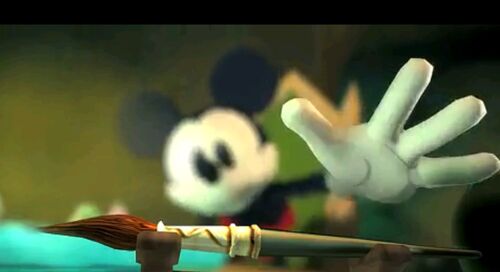
A cartoon mouse playing God with a magic brush? Were do they come up with such things?
A weapon’s main purpose is to destroy, which is why for the longest time we spent our time making sticks sharp and pointy. On the other hand, a paintbrush’s main purpose is to create. These goals run counter to each other, so you’d think a paintbrush would make a really lousy weapon. Normally you’d be right, but there exists a rather famous mouse that proves this wrong. Not only can he destroy with a paintbrush, but he can create as well.
In the course of Epic Mickey, Mickey Mouse (yes, that Mickey Mouse) gets sucked into a dystopian world of forgotten Disney characters and nasty ink monsters. His only tools are his pants and a magic brush that can spew both paint and thinner. The brush is a central gameplay element, as it can create/restore objects with paint, as well as destroy them with thinner. The way you use both shapes the in-game world as you play.
The brush is a very unique tool. With the restorative power of paint, you can befriend monsters, restore what has lost, and even create things out of thin air. With the destructive power of thinner, you can erase pretty much anything from existence. This is unique, not only because you can both create and destroy, but also because it is one of the few weapons that can restore. Mickey’s brush is one of the few things that can shape worlds, and its up to the player to use to either save it or leave a trail of destruction.
Mickey’s brush is a truly unique weapon, and I wish more games focused as much on creation as they do on blowing stuff up. Next time, we’re looking at a spin on the trusty sword. Until then, see you next time.
Hello and welcome to the very first Mechanime review! Every once in while, I will watch and review an anime show featuring mecha (read: giant robots).
Keep in mind, this isn’t a review of the entire show. I usually watch watch the first 6 or 7 episodes to get a general idea of what the show is. If I like the show enough, I will follow up with more reviews. With that out of the way, let’s get to our first show: Genesis of Aquarion.
Opening
Yes, I have an entire category for the opening of the show, but for a good reason. The opening for any show is extremely important. The opening’s job is to convince the viewer to stay and watch. A mediocre opening won’t give the viewer a good first impression, regardless of how good the actual show is.
With that said, Genesis of Aquarion has a pretty darn good opening. The song, “Sousei no Aquarion”, is different from many mecha openings. Usually mecha openings try to pump up the viewer for future action. However, Aquarion’s opening is much more hopeful and focuses more on beauty rather than flash. While its not my favorite opening number, its certainly is unique amongst its counterparts.
Story
These are the bad guys. You can tell by the spooky lighting and the fact that they wish to harvest humanity.
In ancient times, the Earth was invaded by the Shadow Angels, a mysterious force looking to harvest humanity for its energy source, or prana. Their victory was assured until their best warrior, Apollonius, fell in love with a woman human, Seliane. Together they beat back the Shadow Angels with the legendary fighting machine Aquarion. 12,000 years later, the Shadow Angels have returned, hoping to harvest humanity’s prana and repopulate the Earth with their kind. Earth’s only hope is Deava, an organization that combats the Shadow Angels with mechs based on the original Aquarion. However, the only people who can pilot Aquarion are elements, people with special powers such as pyrokinesis and PSI.
Honestly, I think the story is one of Aquarion’s strengths. Its relatively unique amongst all the alien invasion stories that mecha anime usually have. It draws influence from Gospel, Greek mythos, and Hinduism for an interesting universe. The story also manages to tell a linear narrative and still be easy to understand, which is an accomplishment in my book. If you can make your epic story easy to follow and understand, then you're much more likely to keep your audience’s interest. It also saves time, as I don’t have to constantly rewind just to remember who a character is or what the hell is going on.
Characters
From front going clockwise: Apollo, Sirius, Tsugumi, Reika, Jun, Gen Fudo, Rena, Sophia, Jerome, Chloe, Kirk, Pierre, and Silvia. Phew.
Aquarion has no shortage of characters. There’s Apollo, a wild boy who might be the reincarnation of Apollonius; Silvia, tan element and reincarnation of Seliane; Sirius, Silvia’s brother and prince of Alicia; and Gen Fudo, the mysterious leader of Deava. Each of these characters possess some form of uniqueness (Apollo especially), but honestly, many of the characters felt derivative. That is not to say they aren’t worth investing into; the major characters are still interesting enough to care about. However there were many times where I thought, “I’ve seen this character type done before,” which is not bad in and of itself as long as the writing is good enough. Unfortunately…
Writing
...this isn’t written particularly well. The writing of Aquarion is definitely the weak link of the show, which is not a good thing. The best way to describe it is forced: the script forces development, forces conflict, forces romance, and forces Gen to spout pieces of wisdom that isn’t that even wise or profound. The dialogue can be stilted and even silly at times. The writing unremarkable and is rarely genuine. I’m not saying the writing is terrible, but it isn’t particularly exceptional either, and it drags down the product as a whole.
Animation
3D: when regular old 2D doesn't produce awesome enough results.
One thing that’s notable about Aquarion is its use of CG. The mechs and the Shadow Angel’s monsters are animated in CG, not traditional 2D anime style. And for a 10 year old television show, the 3D animation is pretty good. It may be a little stiff, but it still flows and looks appealing. The 2D animation is nothing to sneeze at either. Character designs are polished and the environments look astounding. Aquarion is a clean looking anime; maybe even a great looking one.
Mecha and Fight Scenes
Left to right: Aquarion Lunar, Solar, and Mars
At this point I should mention that the anime’s director, Shoji Kawamori, is no stranger to mecha. In fact, he has designed every single variable fighter (mechs that can transform into jets) in the official Macross series. So it would make sense that the titular mech of this anime is made up of three jets. The jets can combine into three different versions of Aquarion: Solar, which has extendable fists; Lunar, which utilizes a bow, and Mars, which uses a sword. The combination sequences themselves are fun to watch, but it is weird that the combination involves the pilots getting an orgasm-like pleasure (Silvia sometimes shouts phrases like “it feels so good” during some combination sequences- I’m not kidding).
Regardless, the mecha look colorful and sleek, each packing a ton of special techniques. These come in handy when fighting the Shadow Angels’ monster of the week. The fight scenes themselves are short but sweet, featuring some ridiculously flashy attacks (whose names are screamed by the pilots, of course) and enough explosions to keep you interested without going overboard. One of my favorite fights had Aquarion Solar punching a monster to the moon. You know, to make sure it was dead.
Sub or Dub
Subbed. The Japanese voice actors are just more passionate. The English dub isn’t terrible, but it isn’t great either.
Conclusion
Genesis of Aquarion has a great setup and creative universe that can easily hook you. Its art style is great and its use of CG for fight scenes is more than adequate. However, the writing is nothing special, which drags down the product and sometimes makes it hard to invest into the show. Aquarion is worth a shot if you like mecha, but I can’t really recommend it either.